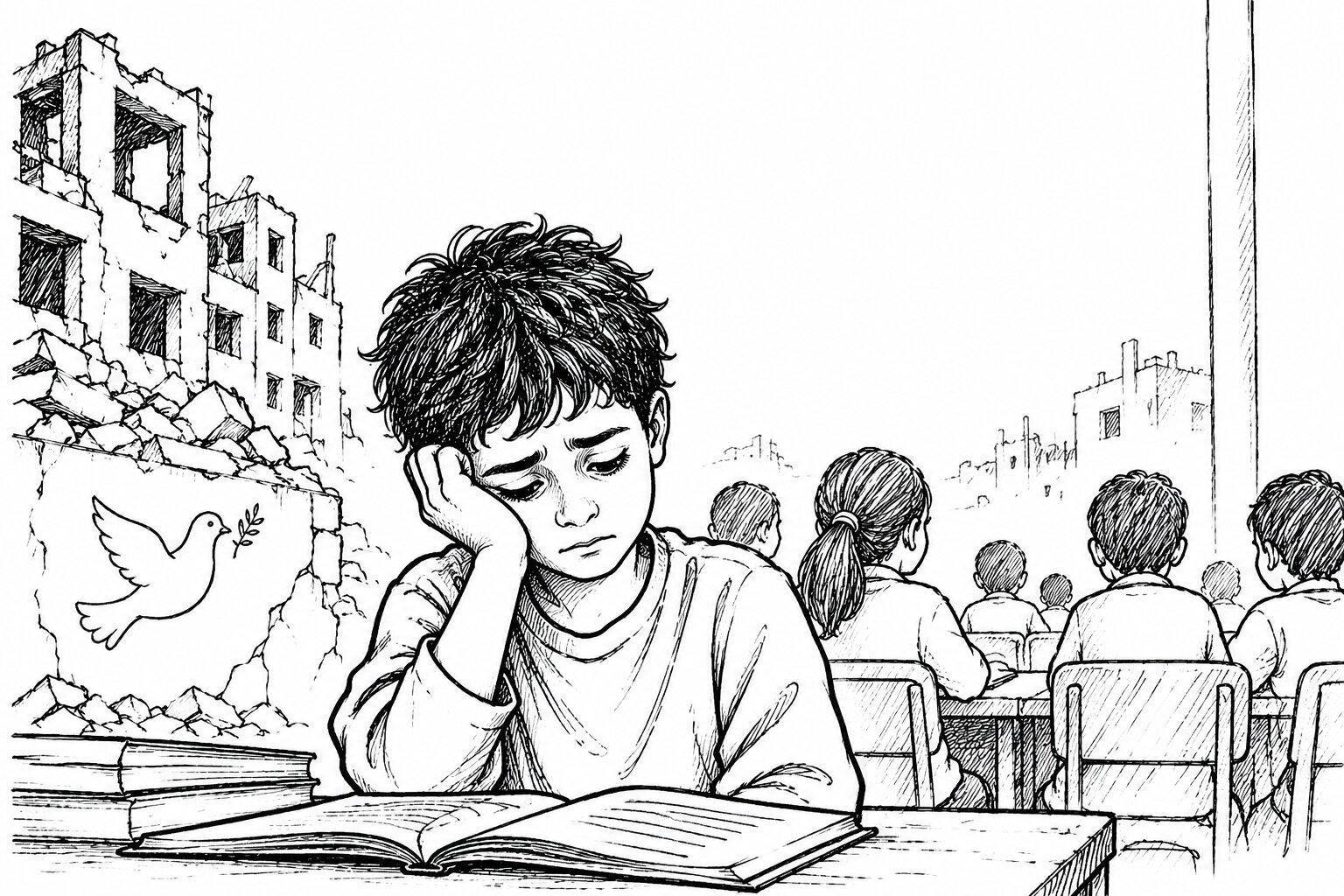
There is this kind of pain I cannot describe, a pain so profound that I wonder if language, with all its vastness, could ever truly contain it. It is the deep, aching pain of being alive in a place where life is being violently torn away; of waking up each morning to attend to your small, mundane tasks, while just a few streets away, or perhaps even less, something is happening that makes the very idea of living seem utterly absurd.
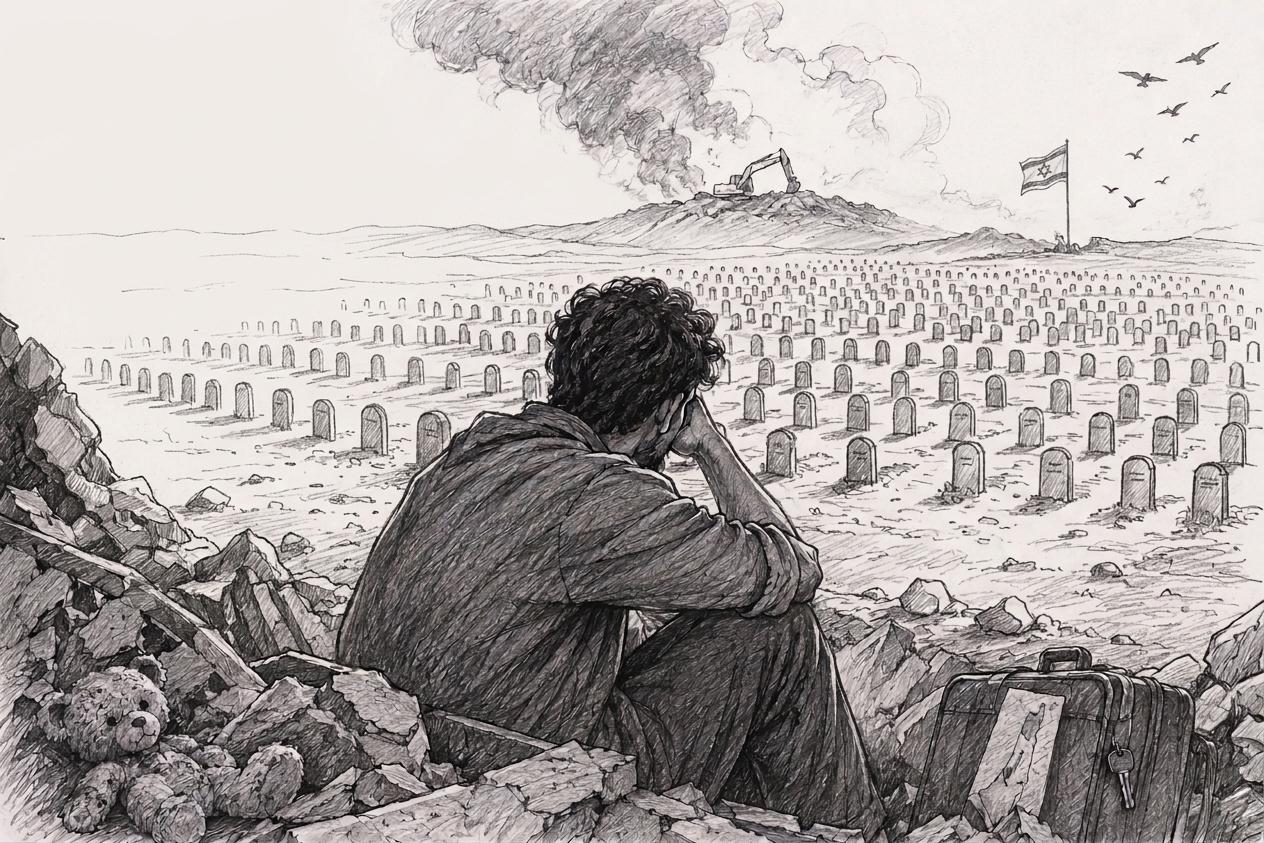
Sometimes I think about death, not as an individual reality that ends with a single body, but as something so immense that the imagination fails to grasp it. How can a cemetery hold seventy thousand bodies? What kind of ground can bear so much absence? What kind of land can accommodate that many headstones? And what kind of memory could ever retain the names of so many human beings, their faces, their voices, and the dreams they never lived to see fulfilled? I try to imagine it, but my imagination fails me. It is not merely because the number is so large; it is because the human mind, it seems, was never made to comprehend an annihilation of this scale without something within it breaking.
And then, in the morning, I go to work.
I take the road I always take, carrying whatever thoughts, appointments, and daily burdens I happen to have, trying to reclaim some semblance of a normal rhythm. Yet, the flags fluttering within my sight refuse to let me forget what is happening. The flags of the state that is waging this aggression, I see them on my way to work, along the very path that is supposed to lead me toward a "normal" life. What a cruel irony! To have the symbols of those who strip people of their lives become part of the everyday landscape you are expected to get used to, simply so that you can carry on living.
I pass by them every day, and I feel something within me that refuses to learn how to get used to it. Perhaps this is the last remnant of my humanity: this inability to accept horrific things as a natural part of the scenery.
But how much despair can a human being bear?
Does despair even have a limit? Or does it, like water, seep into the tiny cracks of the soul, flooding it before you even notice? Sometimes, I feel I have reached the absolute limit of what I can bear, only for something else to happen, revealing an even deeper layer of pain I hadn’t yet touched. At other times, I find myself laughing, getting caught up in some trivial detail, or complaining about traffic, and I wonder if this is normal. How can a person carry such profound devastation within, yet still be annoyed because their coffee has gone cold?
Perhaps we survive not because we are strong, but because we cannot remain in a state of perpetual mourning. We must forget a little in order to eat, ignore a little in order to work, and occasionally act as though the world isn’t collapsing, not because we fail to see it falling apart, but because we need a small space in which to breathe.
How can you love a place that is so deeply wounded? How can you feel a sense of belonging to it, while no longer being able to live within it? How can you remain part of it, while another part of you continues to ache whenever you think of it? I say our homeland, not the homeland we once knew. As though language itself refuses to acknowledge what has happened, as though a possessive pronoun could mend a wall, restore a city, or bring the dead back to life.
Then comes a more painful thought, one that slips into the mind unbidden: What if I were to leave?
Sometimes, I try to imagine a life elsewhere, a street I don’t recognize, a new home, a morning unmarred by images of ruin, a sky no longer clouded by surveillance drones and their relentless noise, and a job I could go to without having to pass by constant reminders that, here, life is being forcibly torn from those to whom it belongs. I let the thought unfold a little, only for it to stumble against a simple, harsh reality: I cannot leave in the way someone who truly wishes to leave should be able to, nor can I return in the way someone who longs for their homeland should be able to.
What kind of paradox is this, where leaving becomes an impossible dream, and returning is equally out of reach? To be trapped between a place that is no longer what you once knew and another place you cannot reach. It is like standing in the middle of an unfinished sentence, unable to place a full stop, yet unable to return to its beginning.
At times, I feel a sense of guilt just for thinking about leaving. Does this mean I have abandoned something? Can one love their homeland so deeply that they wish to escape it? Is there a contradiction in wanting to live somewhere far from the very place that gave meaning to your life? And then, I ask myself: what, precisely, is a homeland? Is it merely the land itself? Is it the people who lived upon it, the homes that no longer stand, the language we speak, or perhaps that part of our souls which no one can ever uproot, no matter how far away we go? Perhaps I have no answer.
All I know is that I am tired of these paradoxes, tired of feeling grateful for my survival, yet saddened that I survived while others did not. I am tired of trying to build a life upon ground that is constantly being uprooted; of planning for tomorrow in a place where the very existence of a tomorrow has become questionable; of longing to settle in a home that no longer stands; and of contemplating leaving a country from which I cannot escape.
What hurts the most, perhaps, is that I never wanted an extraordinary life. I never asked for much, only an ordinary life, with all the boredom, repetition, and small, mundane details that come with it. I want to wake up without wondering how many others will never wake up again. I want to go to work without witnessing things no human being should ever have to see on their way. I want to return to a home I recognize, find my belongings where I left them, and, just as we once did, complain about a cramped space or electricity going out, only to realize, in hindsight, what a beautiful luxury those complaints truly were.
I want to live without having to constantly prove that I am still alive.
And perhaps this is the deepest tragedy of all: that life, which ought to be an inherent, self-evident right, has become an exhausting task; that preserving even a shred of one’s humanity becomes an act of daily resistance; and that you spend your time trying to reconcile a simple desire to live with a reality that never stops to remind you that, here, life is never guaranteed.
I do not know where all these thoughts are leading. I do not know whether I am writing to understand what is happening, or simply to stop myself from becoming numb to it.
Yet I know that, despite everything, I am still searching for that ordinary morning, one that holds no surprises, and for a life in which the greatest achievement is not merely surviving the day.
Because all I ever wanted, in the end, was to be a human being living in his homeland, not a human being spending his entire life trying to survive.